info@helpwithnursingassignments.co.uk
A nursing guide, a structured and personalised guide developed by the nurses after they tackle certain health needs in patients.
Afterwards, nurses classify the health pertinent problems in patients that are recognised by another name, nursing diagnosis or clinical issue.
While the care plan is the foundation of the nursing field, it emphasises giving individualised importance to patients.
Moreover, the nursing care plans are one of the effective tools for nursing at their disposal.
They support RNs tactically and then create the best course of the patient’s care. And thus it increases their communication skills within the healthcare team.
To write a solid care plan (NCP), you must have solid written communication, research and critical thinking skills.
The best methods for executing a care plan are patient Centre collaboration, using clear and free from jargon language. Clarity and personalisation, dynamic and evidence based practice.
In the next guide, I will walk you through how you can execute nursing care plans with best practices.
What Is The Significance Of A Nursing Care Plan?
The nursing care plans are in the written form of the nursing practice. These plans help make sure nurses offer the best healthcare to patients.
Also, they must use patient center, consistent and holistic method. Your care plan must be well-written, must include research about the patients and must include credible sources. And as well as critically evaluate. Nursing students have to make these care plans in their academics to showcase their skills. And in childcare it holds a very promising role, As the whole evaluation of the child is based on it. So, mostly students take Childcare Assignment Help to get it done. But doing it on your own is the ideal way to know it in more depth.
An NCP help you with the following.
-
Firstly, choose a nursing care based on subjective and objective assessment data.
-
The prioritise evidence-based interventions that bring into align with these urgencies.
-
Also, it helps you connect your thoughts to the patient and care team.
-
Help you track the patient growth and adapt care.
-
Finally, it aids you in documenting clearly and professionally.
Key Elements Of A Quality Nursing Care Plan
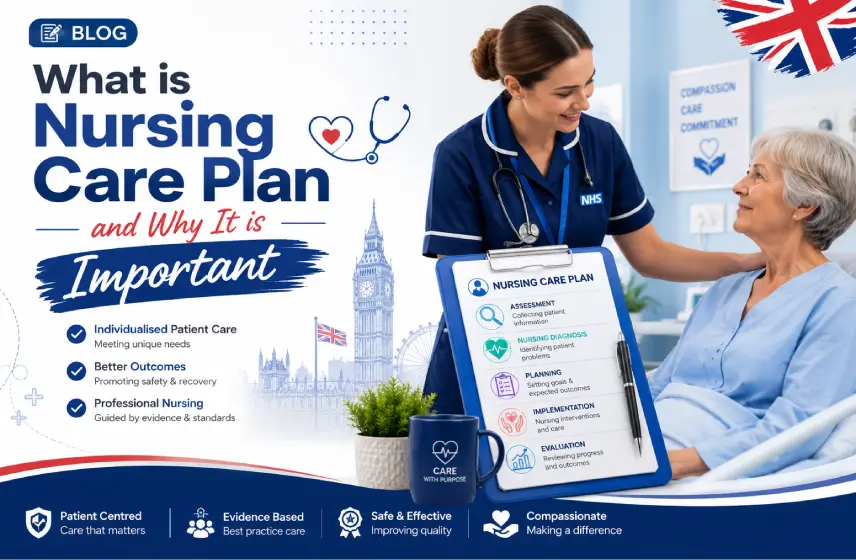
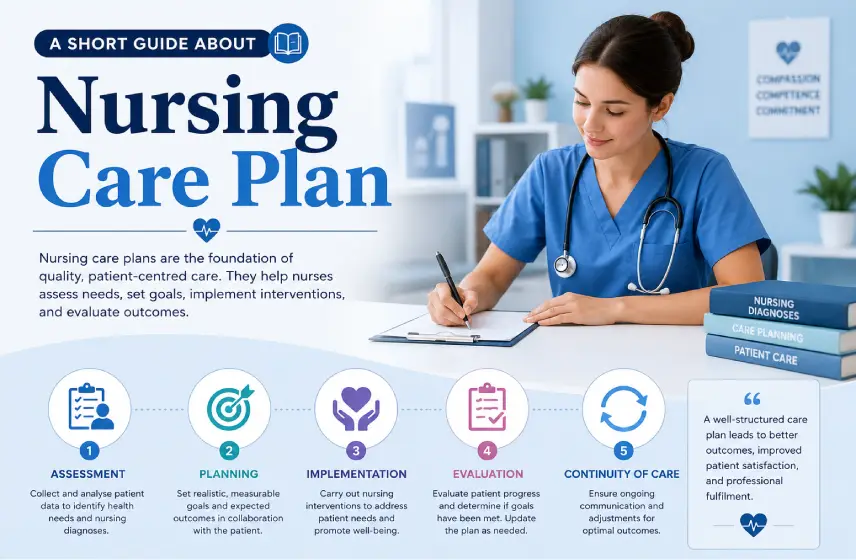
The majority of the students' nursing care plans NCPs follow the 5 steps, such as assessment, diagnosis, expected outcomes, interventions and evaluations.
Here is the breakdown of every step in detail.
1. Assessment
Students need to gather the data both subjective and objective, on patients' conditions. These are symptoms, medical history and vital signs.
2. Diagnosis
Now, learners require actual or possible health problems that nurses can tackle via care and observation.
3. Expected Outcomes
Being a nursing student to master writing engaging nursing care plans to create the aims that define the patients’ care.
And thus every patient obtains the best care possible, and you need to make sure they receive their care.
4. Nursing Interventions
Nursing interventions are one more key element of NCP; they list certain actions nurses will take to help obtain the best results. These comprise both independent and joint intervention.
5. Evaluations
Finally, you need to review the progress of the patient and decide if the aims were met or not. Also, if there is a need of any changes required in care plans, then make changes accordingly.
Step by Step, Implement The Nursing Care Plans In 2025
Here is the step-by-step implementation of the NCP. In the meantime, if you need any help, you can also go to Google, and type Can anyone help with a care plan with Care plan example.
But then remember, do not just hire anyone without doing in-depth research.
-
Detailed Assessment –Firstly, it is essential to grasp the needs of the patient before writing an NCP. Also, research about the patient’s preferences, social context and capacity.
-
Organised Planning-Now, you need to make sure the whole multidisciplinary team (MDT). And make sure you offer organised care across all services.
-
Actionable Aims-To execute well a NCP, you must develop SMART aims.
-
Education- Being a nurse, you need to educate your patients so that they can grasp their conditions and the plan.
-
Preventive planning- You must create a preventive plan and use contingency plans, such as what-if action plans, for addressing the problems. Mostly happens in chronic illness and then creates the necessary steps.
-
Consistent execution- Ensure that every member of the staff executes and implements the plan across shifts.
-
Continuous monitoring- You need to consistently monitor the progress of your patient and then check in it the patient.
-
Review and adopt- Finally, you need to become flexible and revise the plan, such as the patient's condition or need to evolve.
7 Tips To Write A Helpful Care Plan
1. Individualisation
All nursing care plans must be written and also adapted to the needs of the situation. So, you will need to ignore using a generic template rather than you need to create a personalised plan, such care plan template depends on the patient assessment data.
2. Clarity
Always utilise easy-to-read words, clear and formal language once you are writing nursing care plans.
But then, do not use any jargon or complex terms that will confuse the readers. Because the whole evaluation and treatment of the patient depends on it.
3. Evidence Based Practice
You have to make sure you write the nursing care plans that are based on the newest and evidence based practice.
For that, you need to remain informed about the newest research and guidelines to offer the best care.
4. Communication
You need to share the care plans with the healthcare team, such as physicians, therapists and other nurses.
Once you have done effective communication with these experts, you will surely minimise the errors.
5. Regular Review
As the condition changes of the patient,s you need to nonstop and review and update the care plans.
On the other hand, care plans must be dynamic plans that change with the needs of the patients.
6. Patient Engagement
It is essential that you need to involve the patient and their families in the care plan to obtain the best results possible.
Teamwork care planning allows patients, and as a result, fosters engagement in their care.
7. Document in Detail
Finally, you need to write accurate and detailed nursing care plans; it is vital. So, you need to document all interventions, assessments and valuations in a clear and organised way.
Practical Life Nursing Care Plans Examples
Here are the examples and samples of care plans for real-life scenarios.
-
Diabetes Management care plan- This care plan focuses on blood glucose control, lifestyle changes, and complication prevention.
-
Post-surgical recovery care plan- It promotes healing, handles pain and stops obstacles after surgery.
-
Chronic pain management care plan-The main focus of this NCP is to decrease the pain and improve the quality of the patients with present pain problems.
1. Diabetes Management Care Plan
For patients who have an illness of diabetes type 2, the care plans aim on blood glucose control, lifestyle changes, and complication prevention.
A key aim of this plan: Keep the blood glucose levels between 4.0 7.0 7.0mmol/L before eating a meal.
Here are the interventions included in this plan.
-
Regularly display and record blood glucose
-
Manage insulin or oral medications as set by the physicians
-
Execute a balanced diet plan with a dietitian’s help
-
Boost 30 minutes of modest exercise five days a week
-
Finally, clarify proper foot care methods
2. Post-Surgical Recovery Care Plan
Patient who has just recovered from an abdominal surgery, the care plan promotes healing, manages insulin or oral medications and prevents complications.
Moreover, aims are added to these care plans to obtain a pain score of 3 or less (normally on a 10-point scale. It is inside the 48-hour surgery.
Here are the preventions added in this plan.
-
Oversee pain medication as given
-
Help with initial mobilisation (begin with sitting up in bed)
-
Display wound sites for infection marks
-
Instruct deep breathing and coughing exercises to prevent pneumonia
-
Finally, teach correct incision care and activity limits
You can also find a person centered care plan example on Google for an idea. Just perform your research wisely.
3. Chronic Pain Management Care Plan
Patients who have a chronic lower back pain the aim of these care plans is to decrease the pain and hence improve the quality of life.
A goal: Boost and improve the patient's ability to perform daily tasks with least interference.
Below are the interventions of this plan.
-
First, execute a multimodal pain management approach (medications, physical therapy, etc.)
-
Then educate relaxation techniques and mindfulness practices
-
Boost the use of heat/cold therapy if it is suitable for the patients
-
Help with calm exercises to advance flexibility and strength
-
Finally, educate on suitable body ins and outs and ergonomics
Essential Tips For Writing Solid Care Plans.
-
To write solid nursing care plans, you need to assume in process such as assessment, diagnosis, planning, intervention and evaluation.
-
Ensure that you use clear and easy to words language that clear of jargon.
-
Now you need to explain every intervention and then ensure you are clear on what are the reasons you made the choice.
-
Personalise the patient for each patient and think about factors like their present conditions, personal likings and cultural context.
-
Finally, always remain flexible and revise the care plans if the patient's situation changes.