info@helpwithnursingassignments.co.uk
Nursing students!
According to NHS England, 1 in 4 adults in England will experience a mental health problem each year. Isn’t that alarming?
To take care of your physical health, you must also take care of your mental health. You might have felt anxious while dealing with studies, work, or personal responsibilities.
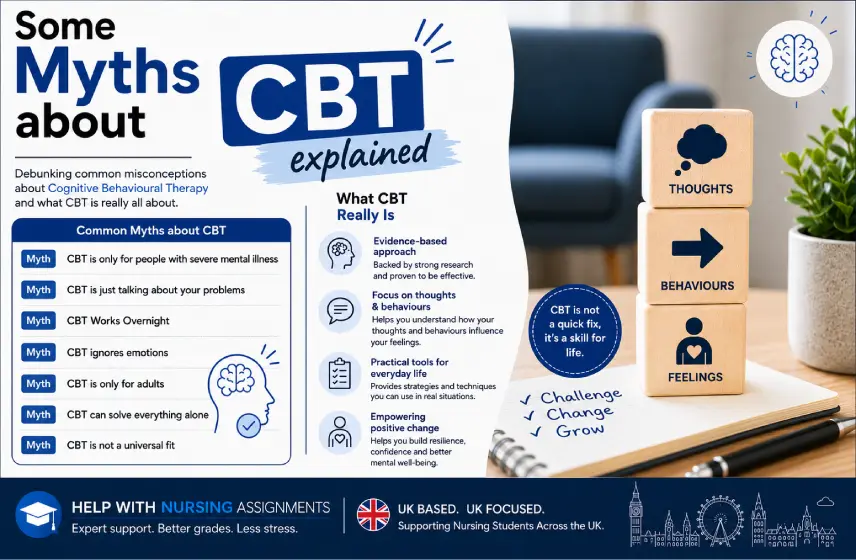
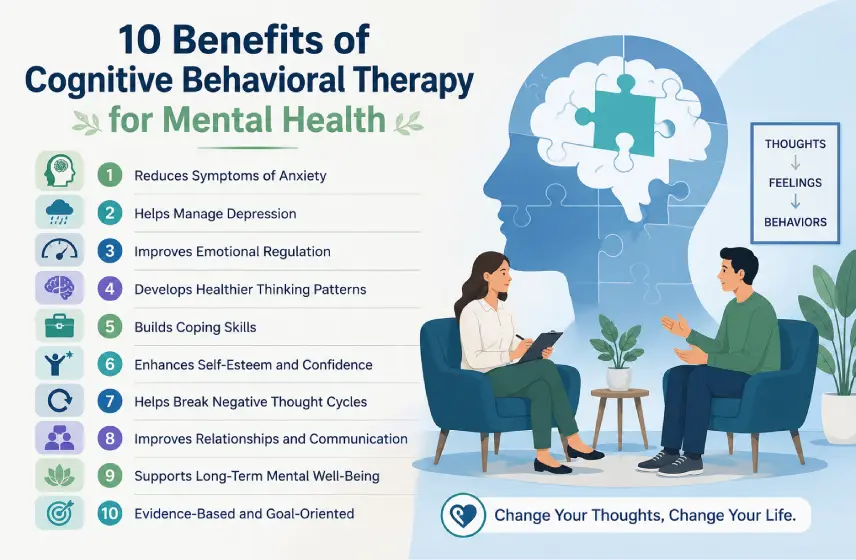
But the good news is that small daily exercises can help them manage their feelings. These exercises are called Cognitive Behavioral Therapy(CBT). It is a simple approach that can change negative thinking patterns and unhealthy behaviors.
Moreover, these exercises are easy to practice at home and can make a real difference in how you feel.
In this blog, you will learn 10 CBT exercises explained in simple words. These exercises can help you and your patient feel calmer and handle all challenges with confidence.
So, read along!
1. Record your Thoughts
It is late at night, and you are staring at your notebook. Your heart racing with thoughts: “I can’t do this. What if I fail?”
Then you remember a simple Cognitive Behavioral Therapy (CBT) exercise: write the thought, question it, replace it.
So, you jot down your negative thoughts: “I will fail.” Then, challenge it: “I have succeeded before," and replace it with a new thought: “I can try my best.”
Your breathing slows, and then panic fades. That is to say, small CBT exercises don’t erase problems. But they help you face them with a clearer, calmer mind.
That is to say, sometimes our minds jump to the worst conclusions. So, keep a thought record. It will help you slow down and question your thoughts.
How to do this CBT Exercise?
Write down all that comes to your mind, such as:
-
What happened
-
What you thought
-
How you felt
-
Evidence that supports the thought
-
Evidence against it
-
Your balanced thought
This CBT exercise helps you see your problem with more clarity. So, when you are clear about what is wrong, you can challenge your negative thoughts and push yourself. But do you lack motivation even for doing that? Then, don't miss reading the next CBT exercise!
2. Behavioral Activation
Do you feel sad and too tired to do anything? Yes, you used to love to play guitar. But now it rests in the corner, untouched. You thought, “I don’t feel like playing.”
In other words, when you lack motivation, you need behavioral activation. Do something small, even without motivation. So, pick up the guitar and play for five minutes. You will feel a little lighter.
How to do this CBT Exercise?
When you do one small positive activity, it breaks the cycle of feeling worse. So, try to do the following exercises:
-
Take a short walk
-
Listen to music
-
Call a friend
-
Sit in sunlight
Remember, action comes before motivation. Once you start, your mood will improve, and you will feel interested in everything. But sometimes we can't figure out our feelings and thoughts. So, start journaling! Read on to find out more about it!
3. Journaling
Do you ever feel overwhelmed but unsure why? You feel your mind is full, but nothing feels clear. So, you take a notebook and begin to write, every worry, every fear, every small thought.
As the words fill the page, your mind feels less crowded. That is to say, you can now see what was troubling you.
How to do this CBT Exercise?
This CBY helps you understand what is bothering you. So, write all your thoughts down, such as:
-
Your mood today
-
What made you happy
-
What stressed you
-
How you reacted
Over time, you will notice patterns. For example, you feel stressed before deadlines or anxious in social gatherings. So, you will become more self-aware.
4. The 5-minute rule
Nursing students, imagine feeling stuck while starting your assignment. You sighed, “It is too much.” So, try the 5-minute rule. That is to say, start writing for just five minutes.
How to do this CBT exercise?
Tell yourself “just five minutes” is enough to break the barrier and build momentum. Most of the time, once you start, you continue working. This trick can reduce your fear and resistance.
5. Progressive Muscle Relaxation
Stress is not only in your mind. It also shows in your body as tight muscles.
How to do this CBT exercise?
So, take these three simple steps:
-
Tighten your toes for 5 seconds
-
Release and relax
-
Move to legs, stomach, shoulders, and face
This CBT exercise can help you feel calmer and sleep better.
6. Mindful Breathing
When you are anxious, your breathing becomes fast and shallow. So, breathe slowly. It tells your body that you are safe.
How to do this CBT exercise?
To do mindful breathing, follow these tips:
-
Inhale for 4 seconds
-
Hold for 4 seconds
-
Exhale for 6 seconds
-
Repeat a few times until you feel calmer.
7. Face your Fears
Avoiding fears makes them stronger. Facing them slowly can reduce anxiety.
How to do this CBT exercise?
If you fear speaking in public, then do the following:
-
Practice in front of a mirror
-
Speak to one friend
-
Talk in a small group
With these steps, you can build your confidence.
8. Task Breakdown
Large tasks can feel overwhelming. Breaking them into small steps makes them manageable.
How to do this CBT exercise?
Instead of wondering how to write my nursing assignment. Try to do the following:
-
Choose topic
-
Research sources
-
Create outline
-
Write introduction
So, these small steps can help you reduce stress and help you stay focused.
9. Identify thinking errors
Sometimes our thoughts are not facts. They are distortions.
How to do this CBT exercise?
Identify these errors in your thoughts:
-
All or nothing thinking
-
Assuming others are judging you
-
Expecting the worst outcome
So, ask yourself, “Is this a fact or just my fear talking?” This question can stop your negative thinking.
10. Be Kind to Yourself
Many people say harsh words to themselves but are kind to others. So, treat yourself with compassion.
How to do this CBT exercise?
Replace your negative thoughts. Instead of saying: "I always mess up." Say: "I am learning and improving. " Your inner voice shapes your confidence.
Why do these CBT exercises work?
These CBT exercises work because they help you become aware of your thoughts and actions. When you change how you think, your emotions and behaviors also change.
You do not need to try all ten exercises at once. Start with one or two that feel easy. Practice them daily. Over time, small changes can lead to big improvements in your mental well-being.
Final Thoughts
Listen up, nursing students!
Life can be stressful, but you are not powerless. Simple CBT exercises can help you manage anxiety, improve your mood, and build resilience. But the key is consistency. Just like physical exercise strengthens your body, mental exercises strengthen your mind.
So start today. Take one small step. Your mental health matters, and you deserve to feel calm, confident, and in control.