info@helpwithnursingassignments.co.uk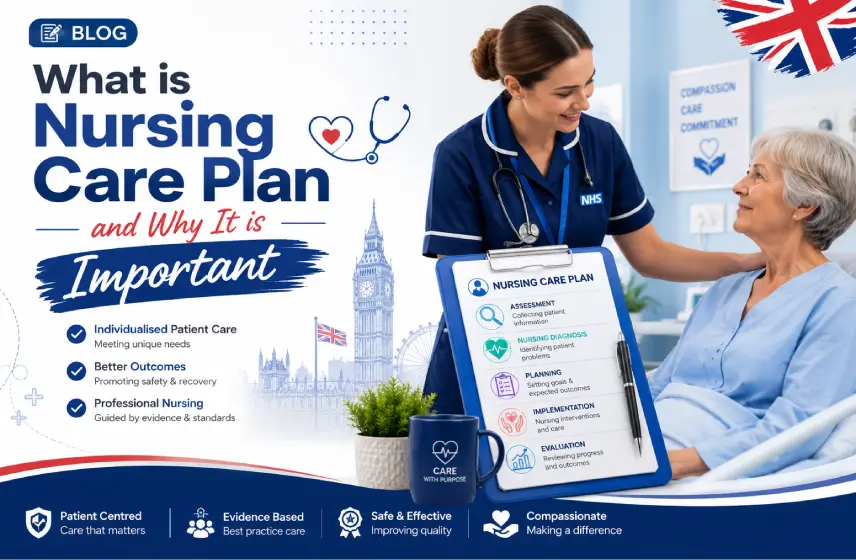
What is a Nursing Care Plan:
A nursing care plan is an essential component of the nursing process. The Nursing care plan helps address the patient’s specific medical needs, conditions, diagnoses, and health progress objectives of the patient. The plan primarily serves as a guide for nurses, outlining the personalised care and providing all the necessary information regarding the patient in a single document.
Given that they include all relevant information and updates, they ensure that the care plan is evaluated on a daily basis to monitor the patient’s progress and assess the effectiveness of the medication.
Furthermore, they ensure that all the important documents related to the patient are compiled in one location for improved communication and understanding of the patient’s condition, allowing for discussions among the nursing staff regarding the current situation and needs of the patient.
What is the Importance of The Nursing Care Plan
The nursing care planning provides extensive benefits for both care providers and their patients. A nursing care plan offers numerous benefits, underscoring its importance.
Below are some significant advantages:
Setting Well-Defined Goals:
Setting specific goals is essential, as health and social care professionals gain significant advantages from having well-defined and measurable goals to pursue, which allows them to focus their efforts efficiently. This suggests that the individual receiving the care is more likely to achieve a favourable outcome.
Uniformity of Care:
When health and social care professionals develop care plans for their individual patients and clients, they can customise the plan to meet that person's specific needs. That is why effective care planning is crucial for delivering high-quality, person-centred care that promotes the well-being of each individual, enabling various members of a care team to communicate clearly and consistently.
Risk and Safety Management:
Clear care planning, with plans accessible to all care professionals, ensures a shared understanding of a patient's safety, leading to effective and consistent risk and safety management.
Personalised Care:
Additionally, the patient is encouraged to take part in creating their own care plan, and their preferences can be integrated whenever possible. This makes it possible for the person getting care to be assured of the services they are receiving.
Efficient care planning is required for providing high-quality, individualised care that upholds the well-being of each person.
What a Nursing Care Plan Includes:
There are several parts that a nursing care plan will address and provide direction on. Usually, these components will consist of:
In-depth Patient Assessment:
The base of any workable plan is a detailed summary of the individual’s care needs, based on an in-depth care assessment. This includes the assessment of both physical and mental well-being of the patient.
Setting Achievable goals:
Specifying clear goals to achieve is crucial for care planning, with a detailed roadmap on how progress will be measured and monitored.
A goal can be anything. For example, a goal might be: “Patient will be able to tolerate a soft-food diet without episodes of nausea or vomiting for two consecutive meals within 3 weeks.”
Specific Care Measures:
To record the suggested care measures that need to be executed in order to achieve the intended results. These suggestions may relate to nutrition, medication, mental health support, pain relief, activities, physical therapy, and modifications to the individual’s living space.
Observing Safety Factors and Personal Risks
Observations regarding the individual's personal requirements and any relevant care or safety factors which need to be considered. For example, if an individual has allergies or a likelihood of becoming upset in specific situations, these issues should all be emphasised in the care plan.
How to develop a Nursing Care Plan
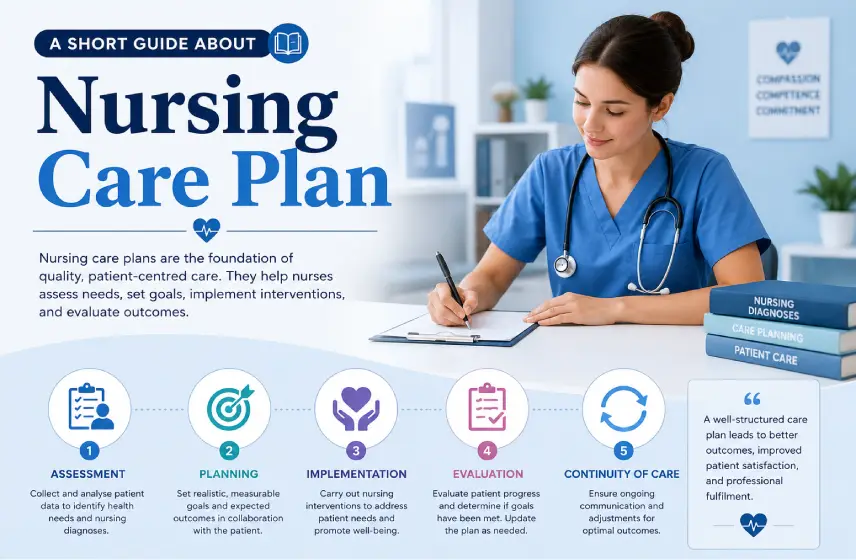
A nursing care plan is a guide that tracks a patient's health from start to finish. It includes checking the patient, naming the problem, setting goals, taking action, and seeing if those actions worked. While different hospitals might use different names for these steps, the main ideas are always the same. Good care plans look at the whole person, not just their illness; this includes their mental health or neds. If you are finding it difficult to understand or write a care plan then you should take Nursing care plan writing help to get it done in the finest form possible.
Patient Assessment
This is the initial stage for information gathering. The nurse is in charge of collecting and organising all the data, ensuring clinical accuracy for every patient's vital signs and history, while assistants can help take measurements.
Nursing Diagnoses
A nursing diagnosis is created by the nurse based on the information gathered, and the nurse identifies the main issues. This is different from a doctor’s medical diagnosis. Nurses use a standard list of official terms to describe the patient’s condition, symptoms and risks while focusing on the individual’s responses to the medication and their health.
Goals
This section explains what the patient needs to achieve. After diagnosis, the goals for the patient are described, including both short-term and long-term.
Short-term, such as lowering pain levels, and bigger milestones in the long-term, including being ready to go home.
All goals must match the nursing diagnosis.
Execution
Execution explains exactly what the nurses will do to help the patient reach their goals by providing consistent, high-quality medical support and daily monitoring services. This section also documents what nursing-specific care the nursing team has performed for the patient.
Evaluation
This is the final section, which describes how well the patient’s condition responded to the care given or, in other words, how the goals were or were not met. If the goals were not met, changes the plan to try something else.. If the goals were met, The nurse might set new goals to keep the patient improving.
Conclusion:
Nursing care plans are the foundation of efficient patient care. By merging the records that contain patient evaluations, nursing diagnoses, measurable objectives, customised interventions, and continuous assessments. These documents allow healthcare providers to deliver excellent, patient-focused care.
Beyond organising daily tasks, care plans guarantee personalised care delivery, facilitate smooth transitions across healthcare environments, and improve team communication. Ultimately, a well-executed care plan provides a vital legal framework while significantly elevating both patient recovery rates and overall satisfaction.