info@helpwithnursingassignments.co.uk
A nursing care plan determines the care level a patient needs. Let's suppose people who have dementia need quality standard care. So, care plans offer every patient aims, goals and structure of care.
The care plan is aimed hence where possible, the patient does not have to lose their complete independence. Moreover, holistic care will assist the patient in maintaining as much control as possible throughout their life.
As a result, it allows them to carry on to the things they most desire in life. Combining theory and practice is crucial to nursing because it ensures safe, meaningful, evidence-based clinical care.
Additionally, integration, often stated in regard to the "theory-practice gap," turns a collection of actions into a scientific field.
This guide explores bridging the gap of a care plan among theory and practice.
Understanding Nursing Care Plans
A nursing care plan is a detailed document that outlines certain care and assistance services. And the aim of it is to meet a person's unique needs.
It also assists as a helpful tool for care specialists, ensuring that the care is offered and it is tailored to every patient’s specific requirements.
Moreover, the NCP normally contain thorough info about the patient's history, functional skills, and preferences.
Key Elements of a Nursing Care Plan
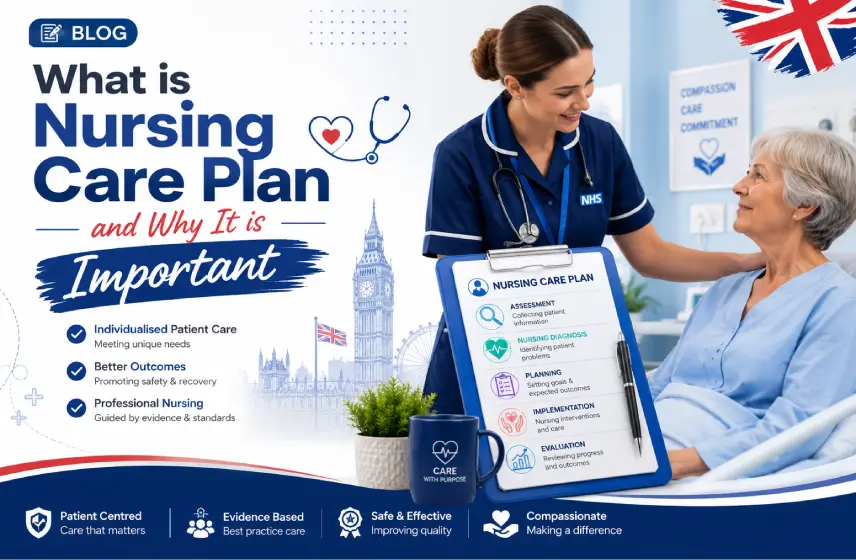
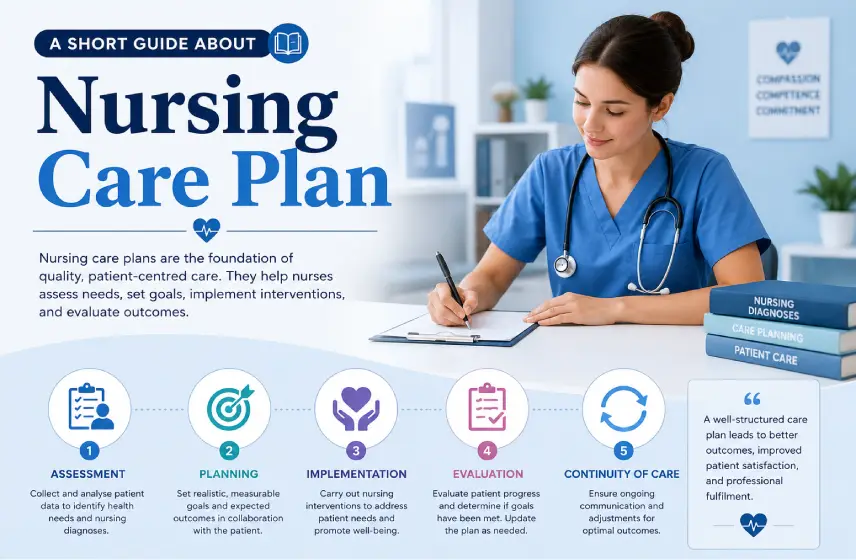
Nursing care plans comprise 5 elements like assessments, diagnosis, planning, implementation and evaluation.
1. Assessment
The very first stage involves collecting the detail info about the health of a patient, cognitive skills, and emotional wellness. And as well as a lifestyle.
2. Diagnosis
Diagnosis depends on the assessment; as a nurse, you have to classify the main areas of need. The diagnosis stage covers medical conditions, mobility challenges or cognitive changes.
Thus, the diagnosis stage assists in deciding the care for your patient's priorities. And as well it makes sure interventions are successful and targeted.
3. Planning
This is where your customised strategy begins. Goals like improving mobility, managing medicine, or getting enough sleep are set.
Moreover, every goal is supported by techniques established with your patient's family, keeping your voice essential.
4. Implementation
After finalising your plan, the team implements it. This may include daily physiotherapy, nutritional support, prescribed medicine, social engagement, or unique wellness therapies at Loveday.
Every feature of your care is precise and consistent.
5. Evaluation
In the final stage, you have to evaluate the care plan, and you must never change it. Changes with your needs and tastes.
Nurses can change their patients’ support and offer new therapies. Plus, they offer new and refined routines to match your health and lifestyle through regular reviews.
Theoretical Foundations of Nursing Care Plans
The theoretical foundations of nursing care plans support a logical blueprint for clinical practice.
So, instead of being simple checklists, these plans are more grounded in crafting solid nursing theories.
Also, it changes task-oriented care into holistic, patient centered practices. Here are the main pillars of the theoretical foundations of NCP.
1. Nursing Framework and models
Dorothea Orem's Self-Care Deficit Theory, Jean Watson's Theory of Human Caring, and Sister Callista Roy's Adaptation Model influence nurses' patient views.
For instance, Orem's objective is to help people regain independence. This defines care plan goals and actions.
2. The Nursing Process (ADPIE)
All care plans are based on the Nursing Process (ADPIE). Systematic methods include assessment, diagnosis, planning, implementation, and evaluation. This strategy ensures cyclical health management.
Unable to write your care plan, and you have plenty of duties to fulfil, plus you are doing a full-time job? Approach a good Nursing care plan writing help
A nursing writing agency usually works with certified and experienced writers. These writers will teach you how to write a good NCP and help you grab the best score.
Sign up Now.
3. System Theory
Many care plans assume that patients are part of a biological, psychological, and social system. This theory advises nurses to consider emotional and environmental factors as well as physical symptoms.
4. Evidence- Based Practice EBP:
Modern care plans use the latest research and clinical expertise. This theoretical pillar ensures that nursing care is based on evidence that improves patient outcomes, not tradition.
Tips for effective nursing care plans in 2026
Here are some tips that can help you write a good care plan.
-
Prioritise- In the first step, make sure the airway, breathing, and circulation are all taken care of first. The reason is that they are the most critical concerns.
-
Pay Attention to Pathophysiology- To make the "related to" part better, you need to know why a diagnosis is relevant.
-
Collaborate- Now you have to take part in the goal-setting process together with the patient and their loved ones.
-
Be specific- In place of "monitor pain," write "evaluate pain level every 4 hours using the 0–10 scale." This is more specific and targeted.